The Best Cornetti in Miami
(And Why Most Get It Wrong)
Let’s get one thing clear: a cornetto is not a croissant with an Italian accent. The two share a shape and a laminated-dough lineage, but they are fundamentally different pastries with different textures, different sweetness levels, and a completely different philosophy about what breakfast should feel like.
A French croissant is all about shattering, flaky layers — buttery, architectural, a little theatrical. A proper Italian cornetto is softer, slightly sweeter, with a tender crumb and a gentle richness that doesn’t announce itself. It’s the kind of thing you eat in two minutes at a bar and think about for the rest of the day.
Miami has a world-class pastry scene. But authentic cornetti — made the Italian way, with the right dough, the right proof, the right balance — are still genuinely hard to find. This is our honest guide to what to look for, and where to find the real thing.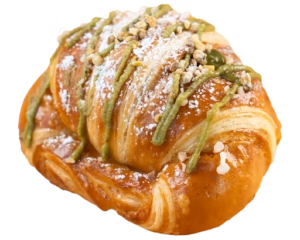
Freshly baked cornetti at Pistacchio Pane e Caffè, Edgewater, Miami.
What makes a cornetto actually good?
Before you can find a great cornetto in Miami, you need to know what you’re looking for. Most people don’t, because most have only ever had the croissant-imitator version. Here are the four things that separate an authentic cornetto from everything else — the same standards we hold ourselves to every morning at Pistacchio.
Slightly enriched with egg and sugar. Softer than a croissant, never cakey. Should pull apart in layers but give gently, not shatter.
Long and slow. A rushed cornetto is dense and forgettable. Overnight proofing develops flavor that no shortcut can replicate.
Light, slightly sweet, with a faint shine. The glaze should enhance, not mask. If it’s sticky or cloying, something went wrong.
Crema pasticcera, marmellata, or pistachio cream — never overwhelming. The cornetto is the star. The filling is the supporting cast.
One more thing: a cornetto should be eaten fresh and warm. The best ones come out of the oven in the morning and are gone by noon. If a caffè is selling cornetti that were made yesterday, that’s already a compromise.
The problem with most “Italian” pastries in Miami
Miami has no shortage of places calling themselves Italian caffès. Many of them are genuinely good — beautiful espresso, nice atmosphere, a real effort at authenticity. But the cornetto is where things often fall apart.
The most common issue: using croissant dough. It’s easier to source, requires less specialized knowledge, and most customers don’t know the difference. But it produces a fundamentally different pastry — great in its own right, but not what an Italian would recognize from their morning bar.
The second issue is size. Italian cornetti are typically smaller and more delicate than what most American bakeries produce. A giant, overstuffed pastry looks impressive on Instagram, but it’s not what you’d find at a bar in Naples or Rome.
The third, and subtlest, issue is sweetness calibration. The cornetto should be just sweet enough that it doesn’t need jam — but light enough that you want the jam anyway. Getting that balance right is where the real craft lives. Most places err too far in either direction.
Cornetto vs. croissant: what’s actually different?
If you’ve ever wondered why the cornetto you had in Italy tasted nothing like the “Italian croissant” at your local caffè, this table explains everything:
| Feature | Italian cornetto | French croissant |
|---|---|---|
| Dough type | Enriched (egg, sugar, butter) | Pure laminated butter dough |
| Texture | Soft, slightly chewy | Flaky, shattery, airy |
| Sweetness | Lightly sweet on its own | Neutral, relies on accompaniments |
| Size | Smaller, delicate format | Larger, more architectural |
| How it’s eaten | Standing at the bar, with espresso | Seated, often with jam or butter |
| Best time | Before 11am, no exceptions | Morning or afternoon |
Italian breakfast culture in Miami
One of the things we love about Miami is how international it is. The city has absorbed Cuban coffee culture so completely that the cafécito feels like a birthright. There’s serious Venezuelan bakery culture, strong French pastry influence, and a growing Japanese breakfast scene in certain neighborhoods.
What’s been slower to arrive is authentic Italian bar culture — not the white-tablecloth Italian dinner restaurant, but the humble everyday caffè where the cornetto and the espresso are the whole point. That’s the gap we’re trying to fill at Pistacchio.
Several factors make this kind of Italian morning culture a natural fit for Miami:
- The pace — Miamians understand a quick, excellent coffee stop. The ventanita culture already exists here.
- The heat — A light pastry and an espresso is exactly what the Miami morning calls for. Heavy brunch food in 85-degree weather is a different calculation.
- The international crowd — A significant portion of Miami’s population has spent time in Europe and knows what a real cornetto is supposed to taste like.
- The neighborhood moment — Edgewater and the surrounding area is in the middle of becoming a real walkable neighborhood. That’s exactly where a proper Italian bar belongs.
Where to find authentic cornetti in Miami
The honest answer is that the options are limited — which is exactly why we wrote this post. Here’s what to know:
The Edgewater and MiMo corridor
This stretch of Biscayne — from around NE 20th Street north through the MiMo district — has quietly become the most interesting neighborhood in Miami for independent caffè culture. It’s where you’re most likely to find the kind of small, owner-operated Italian spots that take the morning pastry seriously.
Our approach at Pistacchio
Housemade, slow-proofed, baked fresh every morning
At Pistacchio Pane e Caffè, we make our cornetti from scratch every morning using traditional enriched dough — not croissant dough — slow-proofed overnight and baked fresh before we open. We offer them plain, with crema pasticcera, and with our housemade pistachio cream, made with Sicilian pistachios.
We also make a version with marmellata di albicocca — apricot jam — which is the classic Italian bar cornetto in its most traditional form. If you’ve had a cornetto in Rome or Naples and wondered why you couldn’t find that experience in Miami, this is what we’re building.
The honest answer to “where is the best cornetto in Miami?” is: we think it’s us. But we’d rather you come try it and decide for yourself.
What to ask before you order anywhere
One question cuts through everything: “Is it made in-house?” A place that makes their own cornetti from scratch will say yes immediately and probably tell you more than you asked for. A place that doesn’t will either deflect or confirm your suspicion. That single question tells you most of what you need to know.
How to eat a cornetto the Italian way
This might seem obvious, but it’s worth saying: the cornetto is morning food. It’s not a snack, not an afternoon treat, not a dessert. It belongs with espresso or cappuccino before 11am. After that, Italians have moved on.
At the bar, you eat it standing. You don’t overthink it. You eat it in two or three bites, finish your coffee, and leave. The whole thing takes five minutes and sets the tone for the day in a way that no elaborate brunch can replicate.
We serve cornetti at Pistacchio with this spirit in mind. Pull up to the counter, order your cornetto and your cappuccino, take a moment, and go. Miami mornings are too good to overthink.
Miami, FL 33137
Edgewater
Sunday: 8:30am – 6:30pm
Pistachio — Marmellata
Until sold out
Follow The Flavor
Want to see what’s fresh from the oven? Behind-the-scenes, limited drops, and our team in action.
Tag us: @Pistacchio.Life — We love to see your moments of happiness.